Best Vinyl Record Storage in 2026: Crates, Shelves, Boxes and Cases Compared
Every type of record storage is good at something. Here is an honest comparison, including where Groove Crate is not the right choice.
By Zachary Medeiros, Groove Crate. . 5 min read.
The short answer: for a growing collection you want to browse, stack and move, a collapsible record crate like Groove Crate is the most flexible option. For a fixed living room display, cube shelving looks great but cannot move or fold. Wooden crates suit a decorative look. Lidded record boxes are best for long-term storage, and DJ flight cases are best for carrying records to gigs. Generic milk crates are the cheapest but are not sized for records.
We make Groove Crate, so we have an obvious bias. That is why this comparison is by type of storage, with the trade-offs stated plainly, including the cases where something else is the better buy.
What makes good vinyl record storage?
- Keeps records upright. Flat stacks warp records over time.
- Fits a 12 inch sleeve properly. Too tight and you scuff jackets, too loose and records lean.
- Easy to browse. If flipping is a chore, records stop getting played.
- Grows with you. Adding capacity should not mean replacing everything.
- Survives a move. Collections move more than people expect.
Groove Crate (collapsible record crate)
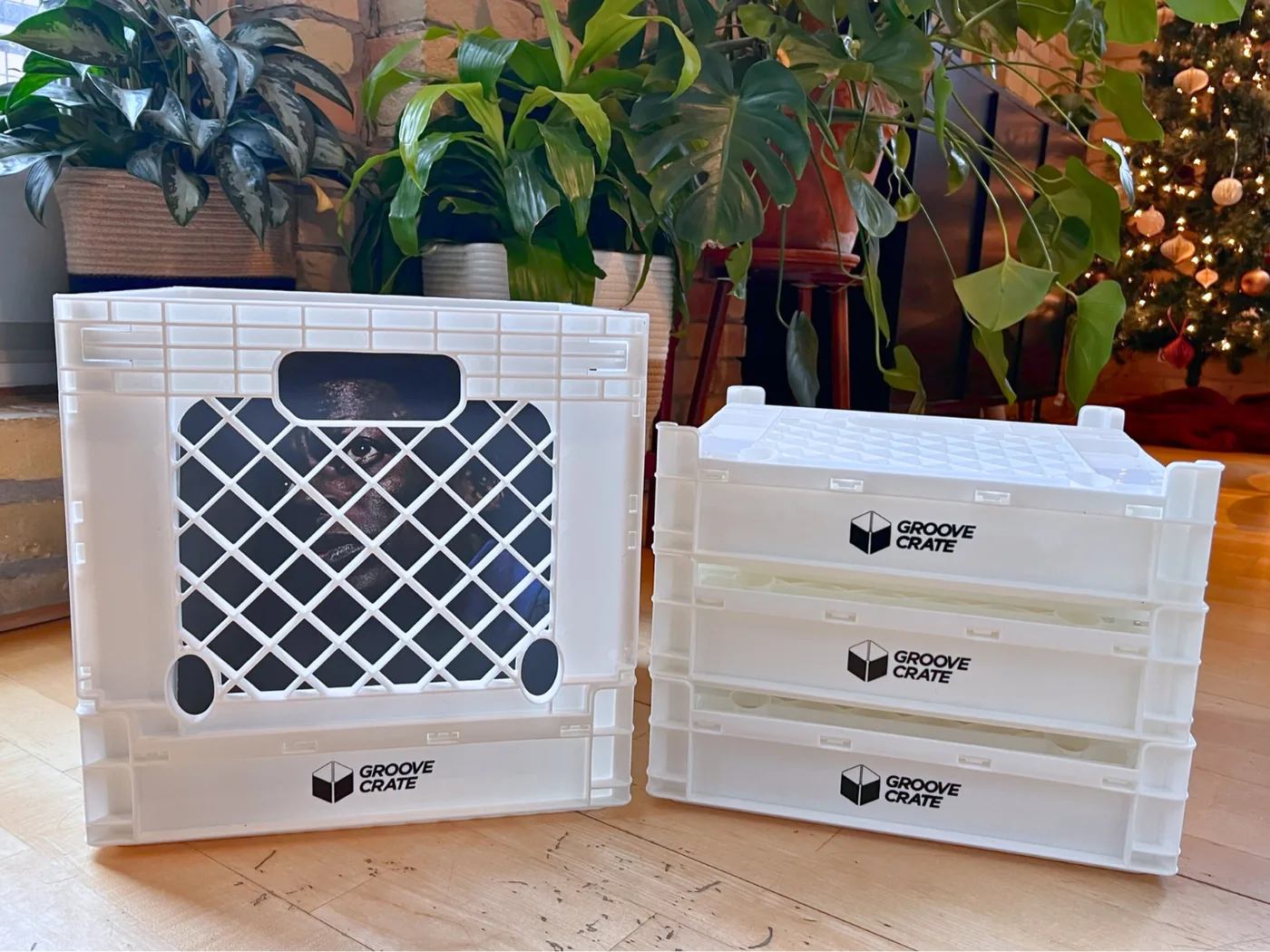
Best for: growing collections, small spaces, renters, anyone who moves or reorganises.
Groove Crate is built around the 12 inch LP, with a 13 inch square interior that holds roughly 80 to 100 records. Crates stack, have carry handles and fold flat to 4 inches high when you do not need them. There is no assembly, and they come in Black, White and Diamond Blue.
Where it is not the best choice: it is an open-topped crate, so it is not a dust-proof long-term archive, and it is not a furniture piece in the way a wooden cabinet is.
Generic milk crates
Best for: the tightest budgets.
Standard milk crates are made for dairy, not records. Interiors vary, so LPs may sit loose and lean or overhang the edge, and rough interiors can scuff sleeves. They do not fold. We compare them in detail in Groove Crate vs milk crates.
Cube shelving (such as IKEA Kallax)
Best for: a permanent living room display.
Cube shelving is the classic record shelf for good reason. It looks tidy, holds a lot and puts spines at eye level. The downsides are that it is furniture: it needs assembly, it does not move easily with records in it, and you grow it by buying another unit. See Groove Crate vs IKEA Kallax for the full comparison. Many collectors use both, with shelving for the main collection and crates for overflow and new arrivals.
Wooden record crates
Best for: a warm, decorative look.
Wooden crates look great and suit vintage rooms. They are usually heavier, do not fold, and can be sensitive to damp. Quality varies a lot, so check interior dimensions and whether the inside is smooth. More in plastic vs wooden record crates.
Lidded record storage boxes
Best for: archiving records you rarely play.
Lidded boxes keep dust and light out, which makes them ideal for records you want to put away for a long time. They are less pleasant to browse, and a box full of records is heavy, so keep each one to a size you can lift comfortably.
DJ flight cases and record bags
Best for: carrying records to gigs.
Flight cases have lids, latches and padding, and they protect records in transit. Record bags are lighter and easier on foot. Neither is meant to be home storage: they are cramped to browse and expensive per record. A common DJ setup is crates at home for the collection and a case or bag for the night's selection. Our guide to mixing vinyl has more on organising a DJ collection.
Quick comparison
| Storage type | Browsing | Stacks or grows | Folds or moves | Best for |
|---|---|---|---|---|
| Groove Crate | Easy | Stacks | Folds flat, handles | Growing collections, small spaces |
| Milk crate | Fair | Stacks | Does not fold | Lowest cost |
| Cube shelving | Easy | Buy more units | Furniture | Permanent display |
| Wooden crate | Easy | Some stack | Heavy, does not fold | Decorative rooms |
| Lidded box | Awkward | Stacks | Heavy when full | Archiving |
| DJ case or bag | Awkward | No | Built to travel | Gigs |
Which vinyl storage should you choose?
- Under 100 records: one or two crates beside the turntable. See storing 100 records.
- A few hundred and growing: stacked crates, or a shelf with crates for overflow.
- 1,000 or more: a planned mix of shelving and crates. See storing 1,000 records.
- Renting or moving soon: crates that fold flat save you buying boxes.
- DJing: crates at home, a case or bag for gigs.
Not sure how many crates you need? The collection calculator works it out from your record count.
Frequently asked questions
What is the best way to store vinyl records?
Upright, snug but not packed tight, in inner sleeves, away from heat, sunlight and damp. Crates, cube shelving and record boxes all work as long as they keep records vertical.
Are milk crates good for vinyl records?
They work in a pinch, but standard milk crates are not sized for LPs, so records can lean or overhang and rough interiors can scuff sleeves. Crates designed for 12 inch records fit better.
How many records fit in a Groove Crate?
Roughly 80 to 100 LPs, depending on the sleeves. Single LPs in standard sleeves reach the top of that range, while gatefolds and outer sleeves bring it down.
Should DJs store records in flight cases at home?
Flight cases are built for transport, not browsing. Most DJs keep their collection in crates or shelving at home and pack a case or bag for each gig.