How to Mix Vinyl Records: A Beginner DJ Guide to Beatmatching on Turntables
Mixing records by ear is a skill, not a talent. Here is the setup, the technique and a practice routine that gets most people to a clean blend in a few weeks.
By Zachary Medeiros, Groove Crate. . 6 min read.
The short answer: you need two direct-drive turntables with pitch control, a two-channel DJ mixer, headphones and a handful of records at a similar tempo. Start the incoming record in your headphones, match its speed to the playing record with the pitch fader, nudge the platter until the kicks line up, then bring it in at the start of a phrase using the channel fader and EQs. Practise with the same two records until it feels boring. That is when it starts working.
What gear do you need to DJ with vinyl?
- Two direct-drive turntables with a pitch fader. Direct drive gets up to speed instantly and holds steady when you touch the record. Belt-drive hi-fi decks are lovely for listening and frustrating for mixing. A pitch range of plus or minus 8 percent covers most mixing.
- DJ cartridges and styli. DJ cartridges are built to track reliably when you cue and nudge. Keep a spare stylus. They wear, and they break at the worst moment.
- Slipmats. These let you hold the record still while the platter spins underneath, which is how you start a record exactly on the beat.
- A two-channel DJ mixer with a cue (headphone) section, channel faders, gain and three-band EQ. Phono inputs are essential if your turntables do not have a built-in preamp.
- Closed-back headphones that block out room noise, so you can hear the cued record clearly.
- Records with clear beats. House, disco and techno are the classic starting point because the tempo is steady and the drums are easy to hear.
If you already DJ digitally, a DVS (digital vinyl system) such as Serato, rekordbox or Traktor lets you control files with timecode records. It builds the same hand skills, but the techniques below are for real records.
How do you set up turntables for DJing?
- Level the decks. A tilted turntable makes the needle skip.
- Set the counterweight to the tracking force your cartridge maker recommends. DJ cartridges usually run heavier than hi-fi ones, which helps them stay in the groove.
- Set anti-skate following your cartridge maker's guidance. Many DJs run it low or at zero.
- Place the decks either side of the mixer, with the tonearms away from the mixer so your hands do not knock them.
- Isolate from bass. Speakers on the same table as the decks cause feedback and skipping. Separate surfaces fix both.
How do you beatmatch by ear?
Beatmatching is making two records play at the same tempo, with their beats landing together. Here is the routine:
- Play record A through the speakers.
- Find the first kick on record B. Cue it in your headphones, then rock the record back and forth over that first beat so you can find it again by feel.
- Release record B on a beat of record A, ideally the first beat of a bar. Hold it back with your fingertip on the label while the platter spins, then let go.
- Listen for drift. If B's kicks run ahead of A's, B is too fast. If they fall behind, B is too slow.
- Correct with the pitch fader, in small moves. Then fix the alignment with a nudge: touch the platter edge to slow it, or gently push the label to speed it up.
- Repeat until the two records hold together for a full phrase without touching anything.
Many people find it easiest to listen with one ear on the headphones and one ear on the room. Others prefer to switch the cue knob between the two channels. Try both.
What is phrasing, and why does it matter?
Most dance music is built in phrases of 8, 16 and 32 beats. New parts, like a bassline or a breakdown, tend to arrive at the start of a phrase. If you start your incoming record at the start of a phrase in the outgoing record, the changes line up and the mix sounds intentional. If you do not, the mix can be technically in time and still sound wrong.
Count it. Four beats to a bar, four bars to a phrase of 16, and listen for the moment the music changes. After a few weeks you stop counting and just feel it.
How do you blend two records cleanly?
The simplest clean blend is a bass swap:
- With the records beatmatched, bring up the incoming channel with its bass EQ turned right down.
- At the start of the next phrase, cut the bass on the outgoing record and bring the bass up on the incoming one at the same moment.
- Over the next phrase, pull down the outgoing channel fader.
Two kick drums and two basslines playing together sound muddy. Only ever let one bassline lead at a time, and the mix stays clean.
Use the gain knob to keep both records at the same loudness on the mixer's meters before you blend. Older pressings and newer masters can be very different volumes.
Build a practice crate
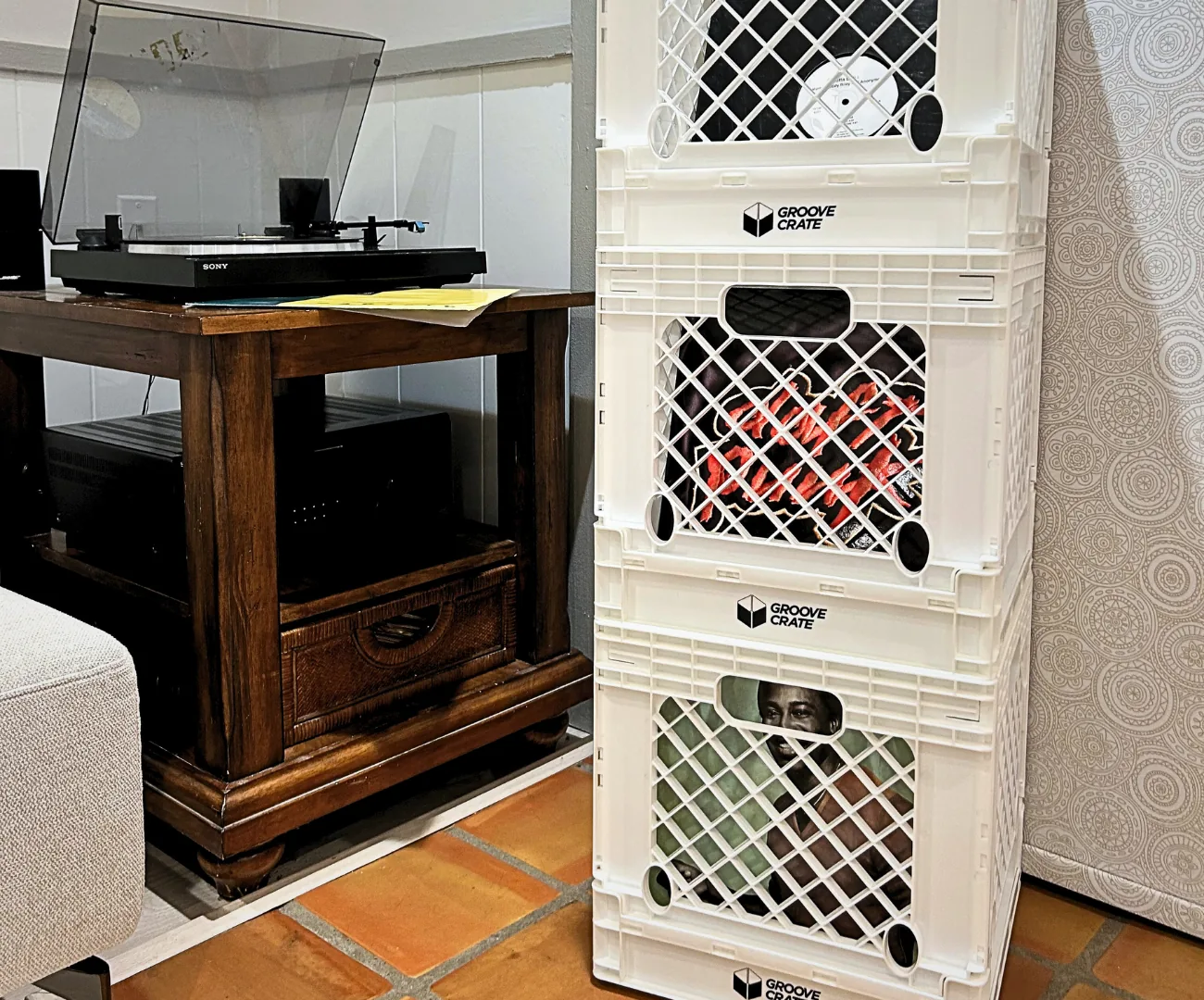
Pick ten to fifteen records at similar tempos and keep them together. Learning the same tracks inside out is what lets you hear the beats instead of searching for them. Write the tempo on a sticker on each inner sleeve if it helps, and note where the first kick and the main phrase changes land.
A Groove Crate beside the decks works well for this. It holds roughly 80 to 100 records, sits at the right height to flip through from the floor or a low shelf, and has carry handles for moving your practice crate around the room.
A practice routine that works
- Week one: beatmatch the same two records over and over. Do not blend, just match and hold.
- Week two: add phrasing. Start the incoming record on the first beat of a phrase every time.
- Week three: bass swaps between three or four records.
- Week four: record a 30-minute mix and listen back the next day. You will hear what to fix.
Short daily sessions beat long weekend ones. Twenty focused minutes is enough to keep progressing.
Looking after DJ records
DJ records get handled more than any others. Hold them by the edges and label, keep them in inner sleeves, and store them upright. Clean the stylus regularly, because dust on the needle wears records fast. Never leave records on the decks or flat in a pile after a session. Our guide on preventing warped records covers the basics.
Frequently asked questions
How long does it take to learn to beatmatch vinyl?
Most people can hold two records together within a few weeks of short daily practice. Smooth, confident mixing usually takes a few months.
Can you DJ with belt-drive turntables?
You can, but it is harder. Belt-drive decks are slower to reach speed and drift when touched. Direct-drive turntables with a pitch fader are the standard for mixing.
What music is easiest to learn mixing on?
House, disco and techno, because they have a steady tempo, a clear four-on-the-floor kick and regular 16 and 32 beat phrases.
Do I need a DJ mixer to mix vinyl?
Yes. A DJ mixer gives you headphone cueing, channel faders, gain and EQ for each deck. Make sure it has phono inputs, or that your turntables have a built-in preamp.