Record Collecting in 2026: A Straight-Talking Guide for New and Returning Collectors
Vinyl is easy to start and easy to overspend on. Here is how to build a collection you actually play, with the mistakes most of us made the first time.
By Zachary Medeiros, Groove Crate. . 6 min read.
The short answer: start with ten to twenty albums you already love, buy used where the condition is good and new where the pressing matters, check prices on Discogs before paying collector money, and inspect every used record under a light before you buy it. Get a turntable with an adjustable tonearm rather than an all-in-one suitcase player, and store everything upright from day one. That is ninety percent of it.
The rest of this guide is the detail: how the hobby looks in 2026, where the money goes, and the habits that separate a collection you love from a pile of records you feel guilty about.
What is different about collecting vinyl in 2026?
If you last bought records years ago, a few things have changed.
- Most big albums are back in print. Labels have reissued huge back catalogues, so you can often choose between a used original and a new pressing of the same album.
- Variants are everywhere. Coloured vinyl, store exclusives and numbered editions are a normal part of new releases. They look great. They are not automatically an investment.
- Price checking is instant. Discogs shows what a specific pressing has actually sold for, so you can walk into a shop knowing whether a price is fair.
- Record shops are a destination again. Independent shops in most cities hold listening events, in-stores and sales days, and they are still the best place to learn.
Should you buy new or used records?
Both, for different reasons.
Buy used when you want the album to listen to, the original pressing is common, and the copy is clean. Used bins are where collections get their character, and a well-kept used record often sounds as good as a new one.
Buy new when the album is recent, when the used copies are beaten up, or when a reissue has been properly remastered. New also means no surprises: no hidden scratches, no warps, no mystery stains.
A good rule: if a used copy costs nearly as much as a new one and you cannot play it before buying, take the new one.
How do you tell if a used record is in good shape?
Most shops use the Goldmine grading scale. From best to worst: Mint (M), Near Mint (NM), Very Good Plus (VG+), Very Good (VG), Good Plus (G+), Good (G) and Poor (P). For listening copies, VG+ is the sweet spot. VG will usually play through with some surface noise. Below that, you are buying the cover.
Grades are an opinion, so check for yourself:
- Tilt it under a light. Light scuffs that catch the light are often cosmetic. Scratches you can feel with a fingernail usually click.
- Look at it edge on. Hold it at eye level and turn it slowly. A wavy edge means a warp.
- Check the run-out groove. The smooth area by the label shows wear from careless needle drops.
- Feel the spine and seams. A split jacket is not a dealbreaker, but it should be in the price.
- Ask to play it. Many shops have a listening station. If a record is expensive, it is a fair request.
How do you check what a record is worth?
Look it up on Discogs, and match the exact pressing, not just the album. The same title can have dozens of versions from different years and countries. The text etched in the run-out groove, called the matrix, is how you tell them apart. Compare what the matrix says with the listings and use the sales history, not the asking prices, as your guide.
Three things push a price up: an early pressing, strong condition, and genuine scarcity. A coloured variant made in large numbers does not hit all three, whatever the sticker says.
Where should a new collector spend money first?
In this order:
- A decent turntable. Look for an adjustable counterweight and a replaceable cartridge. All-in-one suitcase players with fixed, heavy tonearms are the most common way new collectors damage their records.
- Albums you will actually play. Start with the ten records you would rescue from a fire, not the ones you think a collection is supposed to contain.
- Inner sleeves and a brush. Anti-static inner sleeves and a carbon fibre brush cost little and protect everything else you buy.
- Storage that keeps records upright. More on this below. It is the cheapest insurance in the hobby.
Speakers and amplifiers can come later. A modest system playing clean records sounds better than an expensive one playing damaged ones.
Mistakes most collectors make in their first year
- Buying everything because it is on vinyl. Records you do not love take up space you will want for records you do.
- Chasing variants. Buying three colours of the same album is fun once. As a habit, it is the fastest way to empty a budget.
- Stacking records flat. Weight from above, over time, is how records warp.
- Skipping the sleeve swap. Paper inners scuff and shed. Replace them when the record comes home.
- Never playing the "too good to play" copy. A record is made to be heard. Buy a second copy if you need one to keep sealed.
Store it properly from the first record
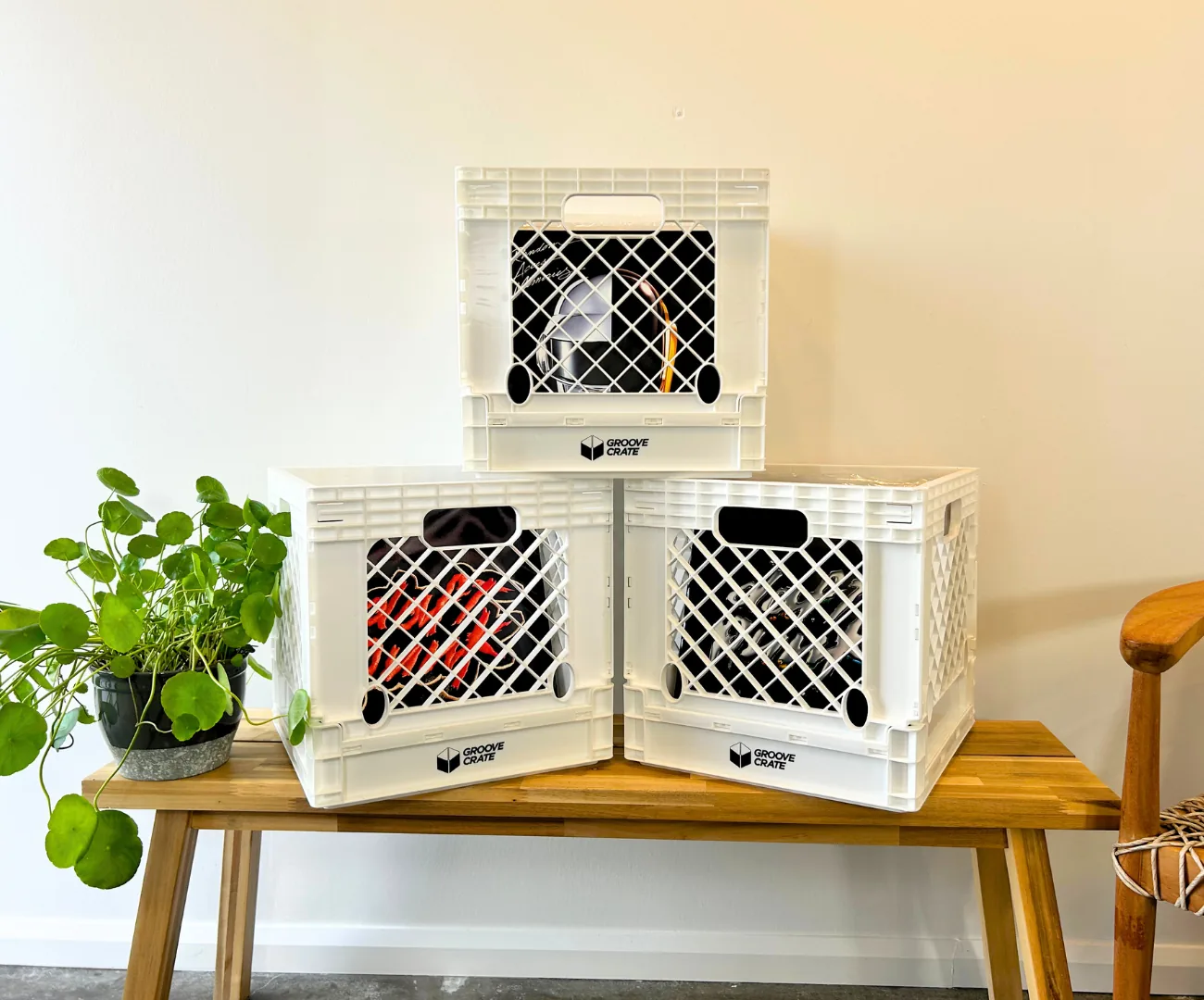
Records should stand vertically, packed snug enough not to lean but loose enough to flip through. They should live away from radiators, sunny windows and damp basements. Do that and a record will outlive you.
A crate is the natural format for a growing collection. Each Groove Crate holds roughly 80 to 100 LPs with a 13 inch interior built around the 12 inch record, stacks when you run out of floor and folds flat when you are moving or reorganising. Our complete guide to storing vinyl goes deeper, and the collection calculator will tell you how many crates you need.
How to keep the hobby fun
Set a monthly budget and keep a short want list. Go to the shop with friends. Play the whole album, both sides, at least once before filing it. Keep a "not yet listened" crate so new arrivals do not get lost. And talk to the person behind the counter. Shop staff are the best recommendation engine the hobby has ever had.
Frequently asked questions
Is vinyl collecting still worth starting in 2026?
Yes. Most major albums are in print, used bins are well stocked, and independent record shops are active in most cities. Start with albums you love and buy at a pace you can afford.
How many records should a beginner start with?
Ten to twenty albums you genuinely love is plenty. It is enough to enjoy the format and small enough that you learn what you actually play before spending more.
What grade should I buy used records in?
VG+ (Very Good Plus) or better is the sweet spot for listening copies. VG records usually play with some surface noise. Always inspect a used record under a light before buying.
Are coloured vinyl variants worth more?
Not automatically. Value comes from scarcity, condition and demand. Variants made in large numbers rarely rise much in value, so buy them because you like them.