How to Organize Vinyl Records: A Practical Guide for Every Collection
There is no correct filing system, only the one you will still be using in a year. Here is how to choose it, set it up, and keep it from drifting.
By Zachary Medeiros, Groove Crate. . 10 min read.
The short answer: file alphabetically by artist if you usually go to the shelf looking for a specific record, or by genre and then alphabetically if you browse by mood. Decide your edge cases once, leave 10 to 15 percent free space in every section, keep a separate crate for current rotation and one for records you have not played yet, and re-file each record before you play the next one. The system matters far less than how easy it is to put a record back.
What follows is the long version: the methods and their real trade-offs, a step by step setup you can do in an afternoon, and worked examples for collections from 100 to 1,000 records.
Start with the question you ask most
Before choosing a system, notice how you actually search. When you walk to the shelf, are you thinking:
- "I want that specific album" then alphabetical will serve you best.
- "I want something jazzy" then genre first.
- "I want something from that era" then chronological.
- "I want something like that label puts out" then by label.
Most people are in the first two camps. Build for the question you ask, not the one that sounds most impressive.
The four filing methods
Alphabetical by artist
Best for: finding a known record fast.
The default for a reason. It scales indefinitely, requires no judgement about what counts as which genre, and anyone else in the house can use it.
The downside: it is poor for browsing by mood. If you want something for a Sunday morning, alphabetical gives you no help at all.
By genre, then alphabetical
Best for: browsing by feel, and for larger collections.
This is how record shops do it, and it works for the same reason: it narrows the field before you start flipping. Genre sections also make a collection feel navigable at a glance.
Genre is subjective and many records sit on a boundary. Two rules keep it workable. Keep the number of genres small, because six to ten broad sections beat thirty precise ones. And file by where you would look for a record, not by what is technically correct.
Chronological
Best for: collections built around a particular era.
Filing by release year turns the shelf into a timeline, and it is genuinely enjoyable to browse if your collection has a historical shape.
The downside: finding a specific record means remembering its release year, which most people cannot do reliably. It works far better as a sub-order inside artist sections than as the top level system.
By label
Best for: collectors who buy by label, such as Blue Note, Motown, Factory or Sub Pop.
A specialist approach that makes sense for jazz, reggae, techno and certain indie collections, where the label really does predict the sound. Less useful for a general collection, where labels are scattered.
Decide the edge cases once, and write them down
Most disorganisation is not a bad system. It is inconsistency. Make these calls at the start and keep a note of them somewhere you will find it again:
- Solo artists: surname or first name? Surname is more common.
- Leading "The": does The Beatles file under T or B? Most people ignore the article.
- Within an artist: release date or alphabetical by title? Release date tells a better story and keeps reissues beside the original.
- Compilations and various artists: under title, or their own section?
- Soundtracks: under the film title, the composer, or separately?
- 7-inch singles: they cannot share a section with LPs without leaning, so give them their own container.
- Box sets: often too thick to file normally. Many collectors keep a dedicated crate end for them.
None of these choices is wrong. What causes problems is deciding differently each time.
Setting it up, step by step
Step 1: choose the system and the sections
Pick one of the four methods above, then write down the section names. For alphabetical that might be A to C, D to F and so on. For genre it might be six to ten broad headings. Knowing the sections before you start is what stops a sort turning into an all day project.
Step 2: work out how much space you need
Records stand upright, so plan in linear inches rather than volume. A container with a 13 inch interior holds roughly 80 to 100 records, which is about six to eight records per inch depending on your sleeves. Plan at about 85 per section so nothing is packed to the brim.
If you would rather not do the arithmetic, the collection size calculator works it out and suggests a pack.
Step 3: sort in liftable sections, not on the floor
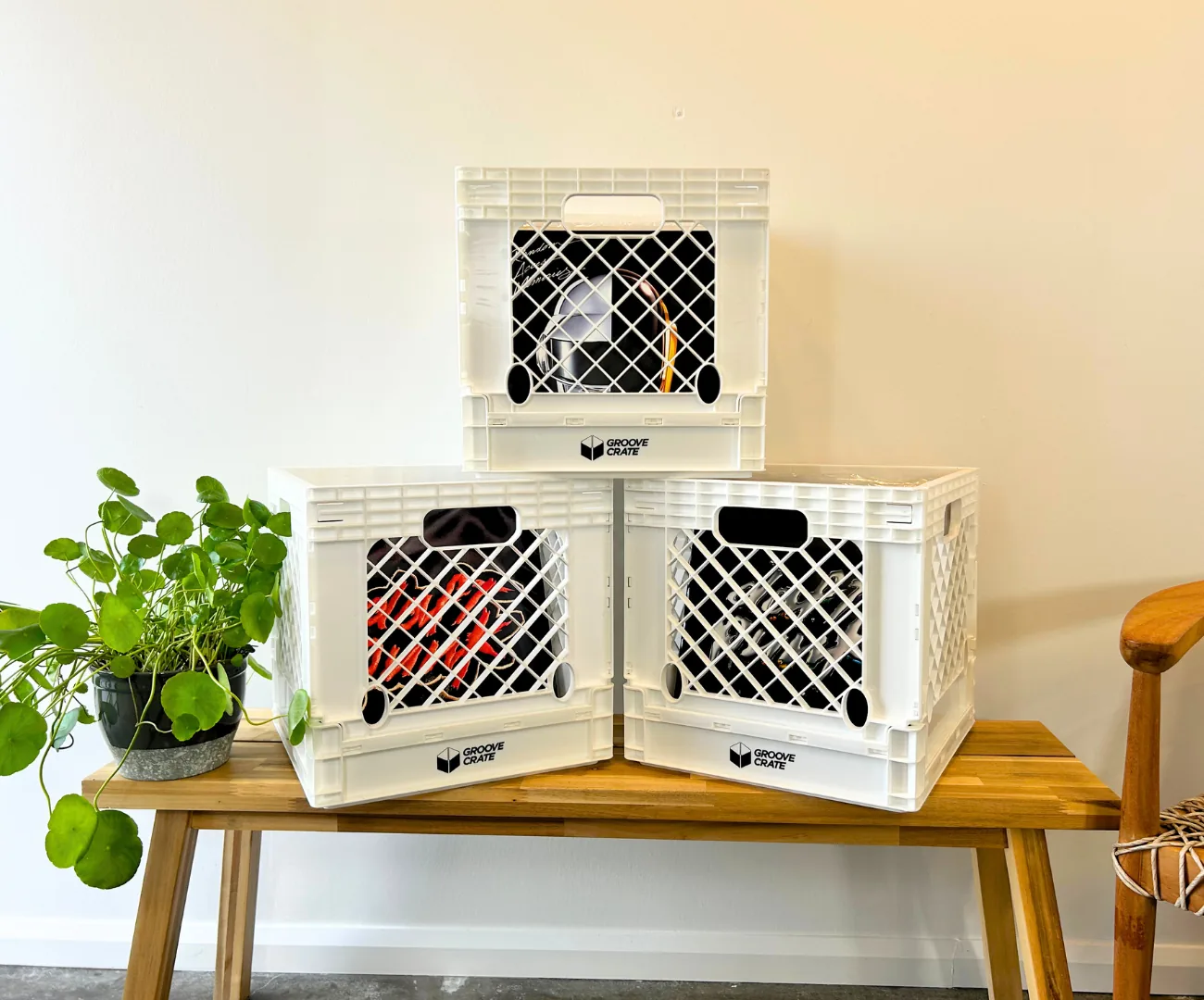
Work through the collection a section at a time rather than emptying everything out. A full teardown means hundreds of records stacked flat while you work, and flat stacks under their own weight are exactly the condition that warps them.
Sorting in sections also means you can stop halfway through without leaving the collection unusable, which matters, because reorganising almost always takes longer than planned.
Step 4: leave growth room
Aim for 10 to 15 percent free space in every section. A section filled to capacity means every new record forces a shuffle down the whole shelf, and that is precisely the moment people stop re-filing. This is the single most common reason a freshly organised collection drifts back into chaos.
Step 5: add the two working sections
Alongside the main system, two extra sections earn their keep more than any filing refinement:
- Current rotation. A small crate beside the turntable for what you are actually playing. It keeps daily churn out of the main collection.
- Not yet listened. New arrivals live here until you have properly heard them. Without it, records bought on a whim get filed straight into the collection and never played.
Dividers and labels
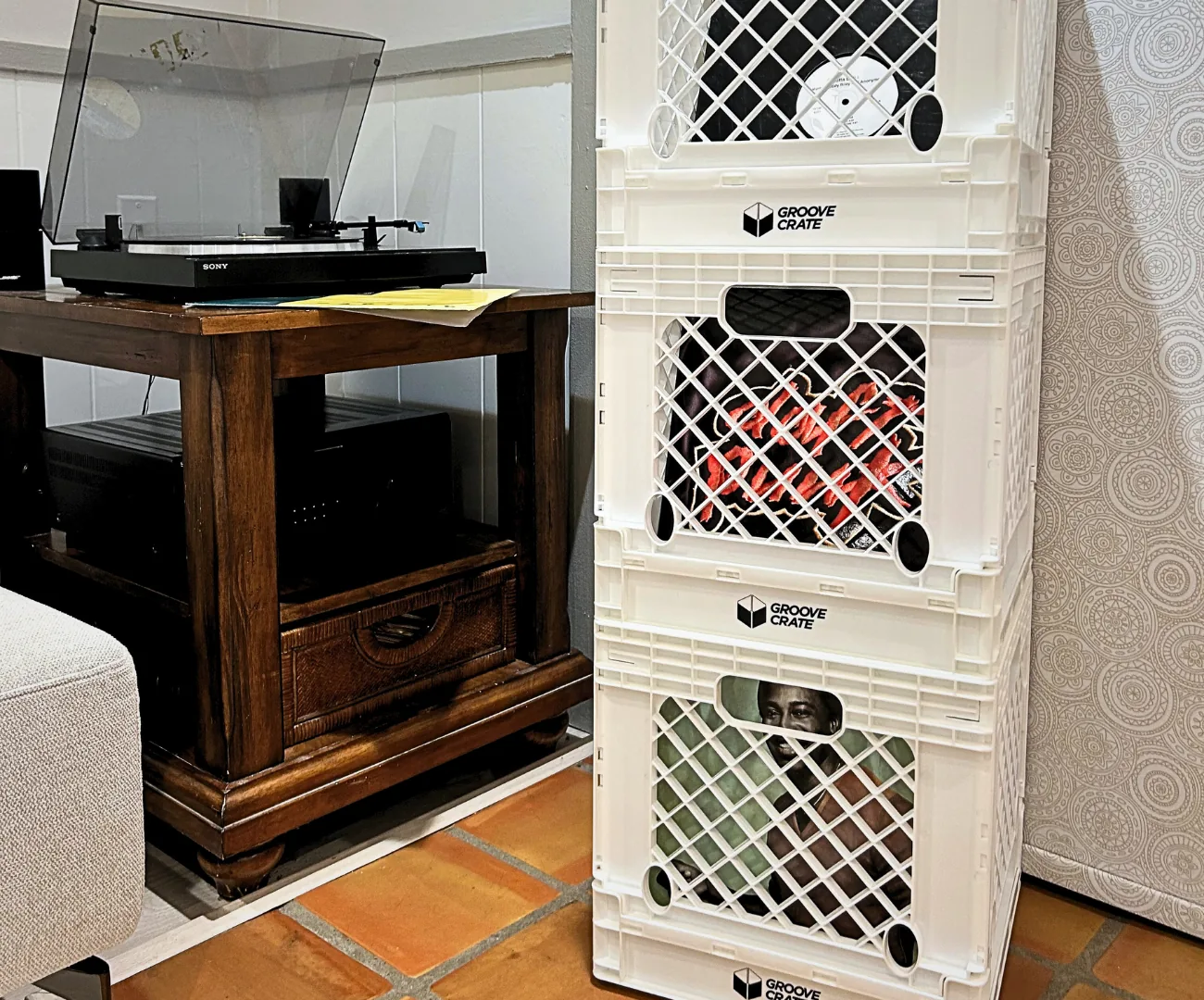
Dividers do two jobs. They mark sections so you can navigate at a glance, and they physically stop records leaning as a section empties. Leaning is a slow cause of warping, so dividers protect records as well as order.
Practical options, cheapest first:
- Rigid card or plastic dividers with a tab that stands proud of the sleeves. The tab is the important part. A divider you cannot see from above does nothing.
- A physical container per section. If a section is its own crate, the container is the divider. This is why record shops use crates and bins rather than one long run.
- Bookends at the end of a shelf run, to hold the last few records upright when a section is not full.
For labels, write the range rather than the contents: "D to F" or "Soul" ages better than a list of artists you will amend every month. Put the label where you read it from, which is the front face of a crate at floor level and the top edge of a divider at eye level. Keep them removable, because sections shift as a collection grows.
A workflow for new records
Most collections fall apart at the point of acquisition, not at the point of filing. A short routine fixes it:
- Sleeve it. Replace a paper inner with an anti-static poly-lined one, and add an outer sleeve if it is a record you care about.
- Catalogue it while it is still in your hand. One record takes a minute.
- Put it in the not yet listened section, not into the main collection.
- File it properly after you have played it, which is also when you will remember what it sounds like and where it belongs.
The re-filing habit matters more than the system. A record put back immediately takes five seconds. Forty records scattered around the room takes an afternoon, and by then you are not doing it.
Cataloguing options
Once a collection passes a few hundred records, a catalogue stops being an indulgence. The main practical benefit is that you stop buying records you already own.
- Discogs is the most widely used option. You can add records by searching or scanning the barcode, it tracks pressings and versions, and it gives a rough sense of value. The version detail matters, because the same album can exist in dozens of pressings.
- A spreadsheet works fine and some people prefer it. Artist, title, year, pressing notes, condition and which section it lives in covers most needs.
- A collection app on your phone is worth it mainly so you can check whether you already own something while standing in a shop.
Whichever you use, log records as they arrive. Cataloguing 400 in one sitting is miserable. Cataloguing one when you get home is nothing.
Worked examples by collection size
Around 100 records
One or two sections is plenty. Alphabetical by artist, with a small current rotation pile beside the turntable. Do not build a genre system yet, because at this size it adds navigation overhead without saving you any browsing time. Detail in how to store 100 vinyl records.
Around 300 records
About four sections. This is where dividers start earning their place and where you can no longer see everything you own at once. Alphabetical still works well. If you browse by mood more than by title, this is the right moment to switch to genre first, while re-sorting is still a single afternoon. See how to store 300 vinyl records.
Around 500 records
About six sections, and a catalogue becomes genuinely useful. Split the collection into two or three groups rather than one long run, so every section stays reachable without a step stool. Genre and then alphabetical is the system most collections settle on around here. See how to store 500 vinyl records.
Around 1,000 records and beyond
About twelve sections. Think in zones the way a record shop does: a stack for current rotation near the turntable, two for the main collection split by genre or alphabet range, and one for everything else. At this size the section labels matter more than the fine ordering within them. See how to store 1,000 vinyl records.
Storage and organisation are the same job
An organising system only survives if the physical storage supports it. Two things matter most.
Sections you can lift. If a section is a container you can carry to the sofa, you will browse and re-file properly. If it means kneeling in front of a low shelf, you will not. Around 80 to 100 records is a comfortable one person carry.
Room to grow, without rebuilding. Modular storage lets you insert a section between two others. A fixed shelving unit does not, so growth means a full reshuffle or a second unit.
Groove Crate is built around that first constraint: each crate holds roughly 80 to 100 records, has a 13 inch square interior so albums stand square rather than leaning, stacks as sections multiply, and folds flat to 4 inches when a section is retired. If you are choosing between crates and a shelving unit, record crates vs shelving compares them properly.
Reorganise rarely, and only with a reason
Reorganising a whole collection is satisfying but disruptive, and each full reshuffle means more handling than usual. Change the system when it genuinely stops working, not because you saw a nicer arrangement online.
The underlying principle
Every point here is really the same idea: reduce the friction of putting a record back. Systems fail at the moment of re-filing, so growth room, liftable sections, clear dividers and a rotation crate are worth more than a cleverer filing scheme.